Consumption of sweets of soaring in Urban India; 40% growth in households that consume sweets thrice or more each month
- ● 7 in 10 urban Indian households consume traditional Indian sweets and sweet packaged foods like chocolates, biscuits, cakes, etc. 3 or more times a month
- ● 70% of those surveyed say highly likely to switch to 30% less sugar alternatives if they were available
- ● 43% household consumers say majority addicted to sugar and sugary products
October 18, 2025, New Delhi: Traditionally no Indian meal was thought to be complete without partaking something sweet be it mishri (sugar candy), jaggery or any kind of sweet preparation. Times have changed as the array of sweets and desserts expands, keeping abreast of new trends and preferences.
Slowly many affluent consumers are moderating their refined sugar intake in favor of healthier alternatives, while the mid-income and rural sectors are increasing their consumption of branded sweets. Many things may have changed but the love of anything sweet lingers be it Indian sweets or ice creams or chocolates. For the health-conscious Indians, who are growing in number, many sugar-free options are now available in the market right from products made with sugar substitute natural ingredients like honey, jaggery or dry fruits like figs. This helps many consumers feel less guilty about their indulgence. Then too there are Indian sweets made with a twist like baked gujiyas, multigrain malpuas, oats biscuits, strawberry kheer, dry fruit sweets, etc.
With Diwali being the period when sugar consumption soars in India, LocalCircles concluded its 2025 sweets consumption survey which attempted to understand if there had been any change in the sugar consumption pattern of Indian households. Also, whether there is any shift from demand for traditional sweets to other products containing sugar. It also attempted to understand via the survey, the acceptability of lower sugar products amongst Indian household consumers. The survey received over 84,000 responses from consumers located in 303 districts of India. 61% respondents were men while 39% respondents were women. 46% of respondents were from tier 1, 29% from tier 2 and 25% respondents were from tier 3 & 4 districts.
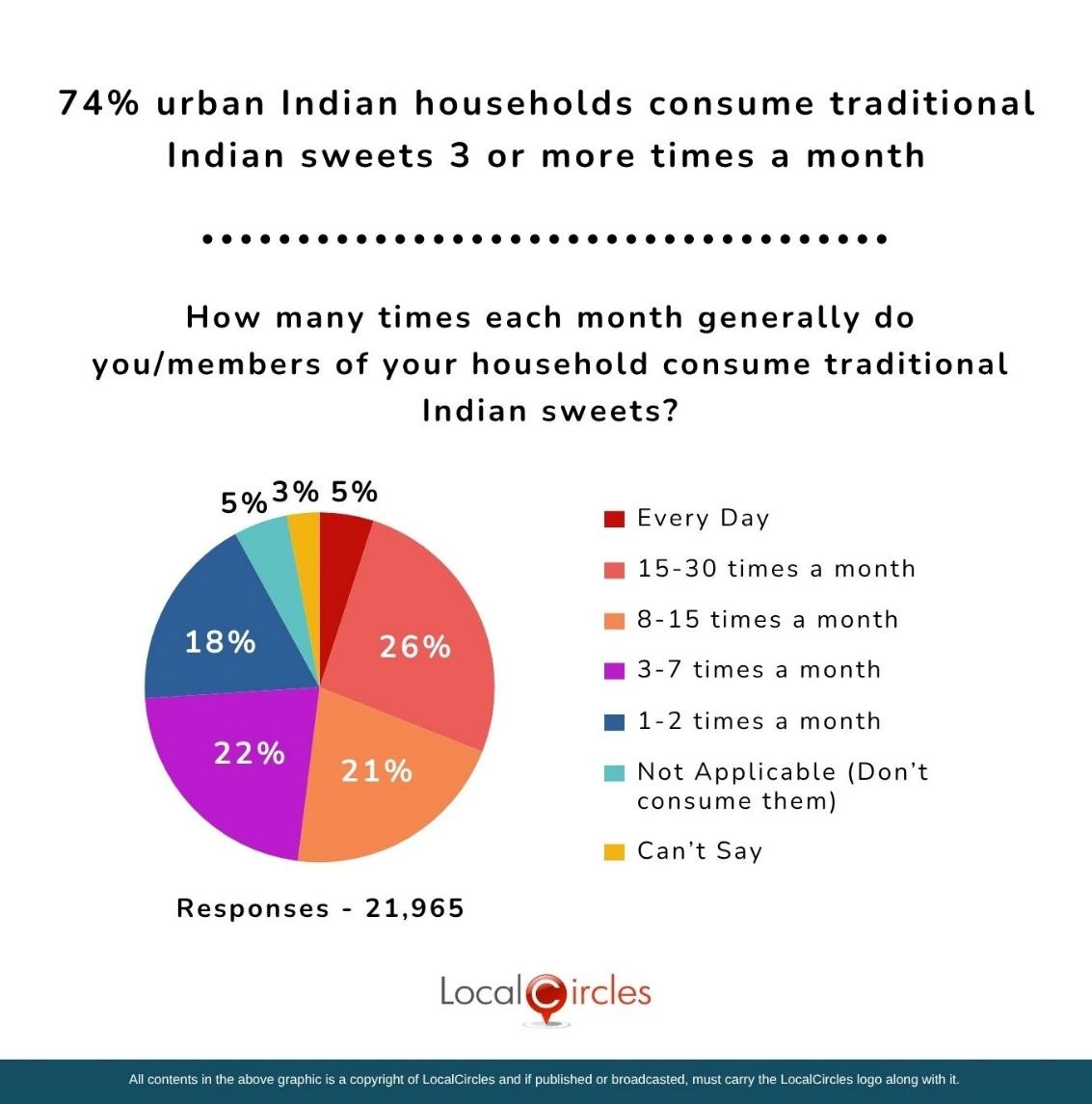
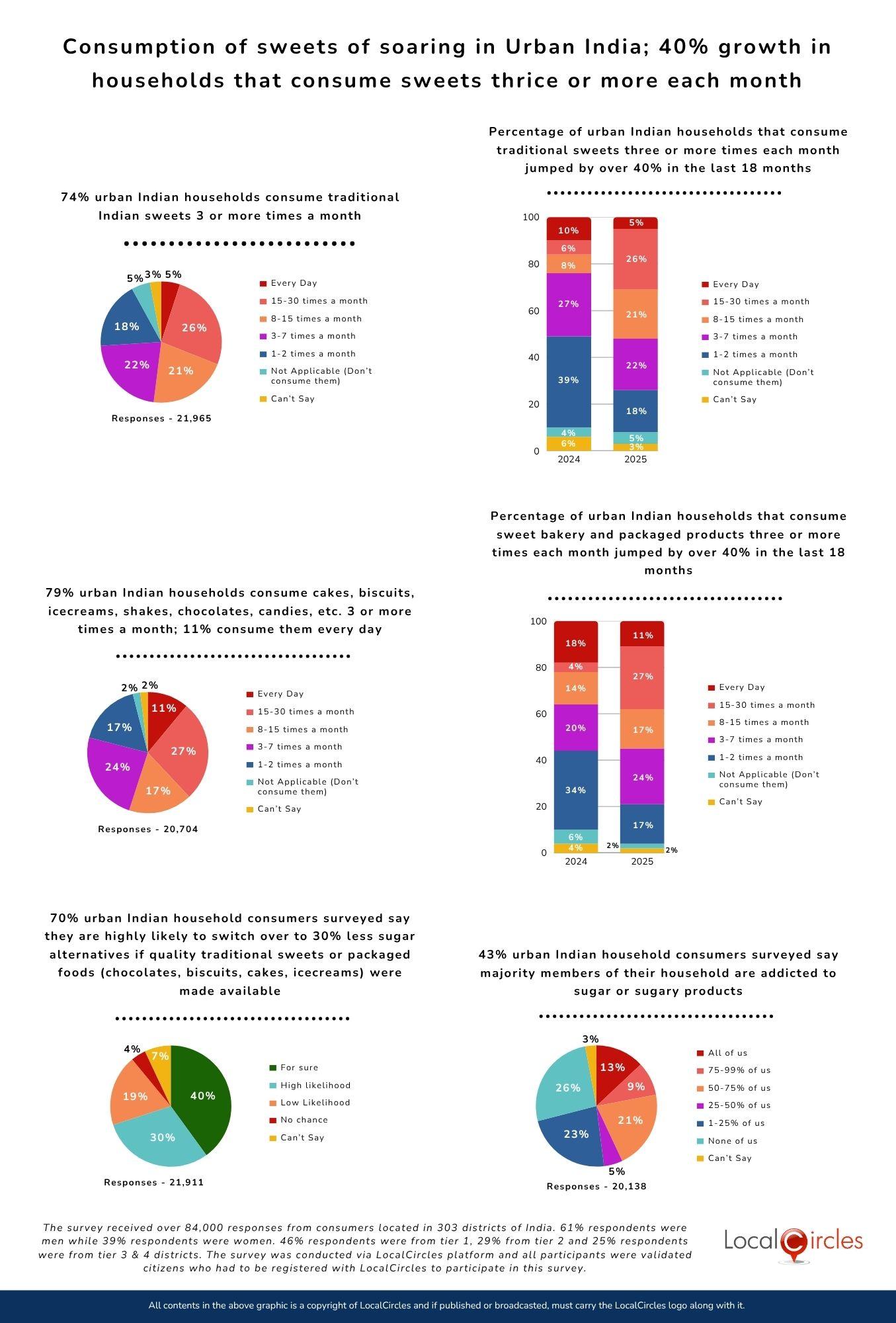
74% urban Indian households consume traditional Indian sweets 3 or more times a month
The survey first asked consumers, “How many times each month generally do you/ members of your household consume traditional Indian sweets?” Out of 21,965 who responded to the question 5% indicated “every day”; 26% of respondents indicated “15-30 times a month”; 21% of respondents indicated “8-15 times a month”; 22% of respondents indicated “3-7 times a month”; 18% of respondents indicated “1-2 times a month”; 5% of respondents stated the question is “not applicable (don’t consume them)”; and 3% of respondents did not give a clear answer. To sum up, 74% urban Indian households consume traditional Indian sweets 3 or more times a month.
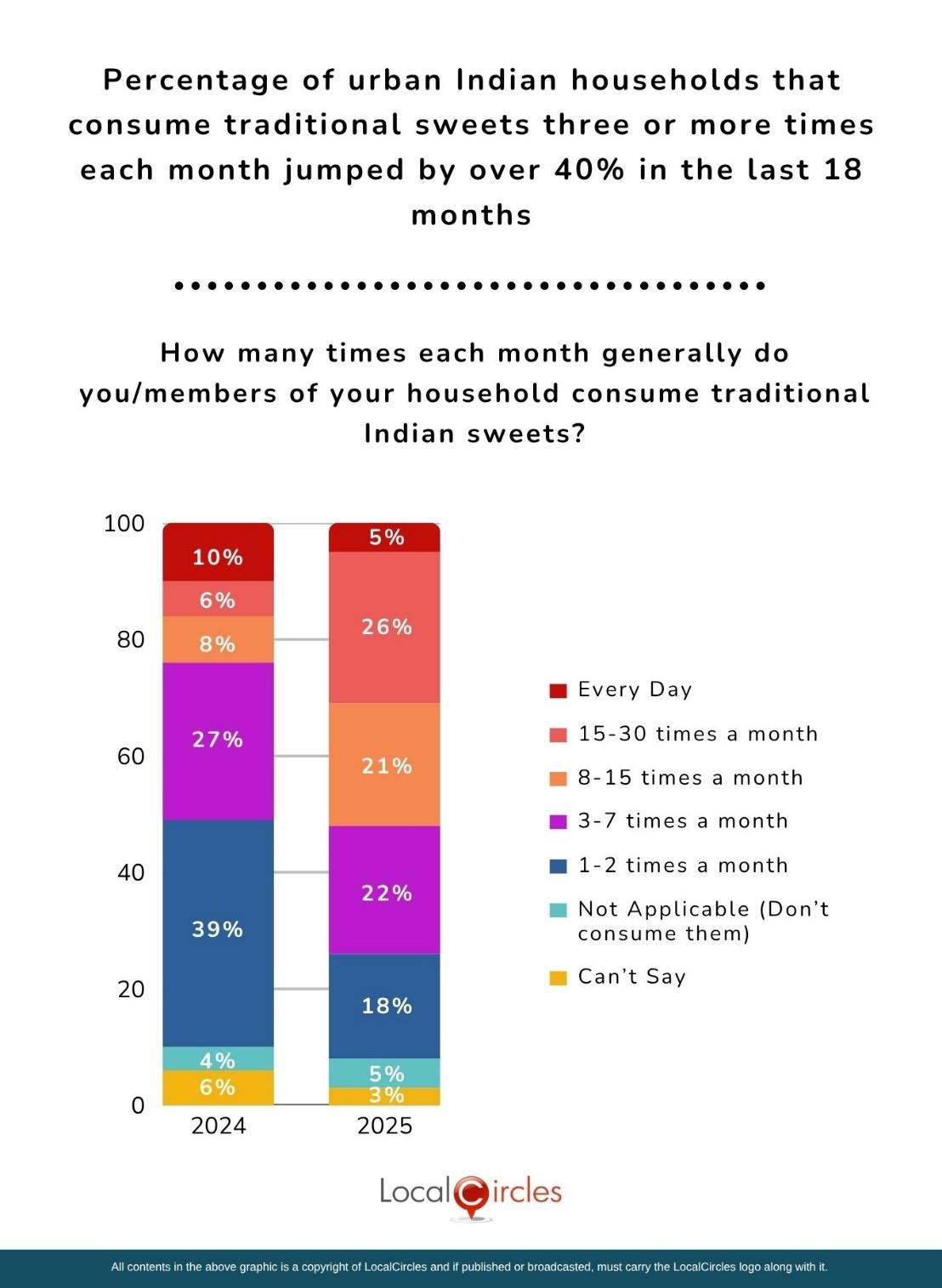
Percentage of urban Indian households that consume traditional sweets three or more times each month jumped by over 40% in the last 18 months
Comparison between the survey results in 2024 shows that the percentage of urban Indian households that consume traditional sweets three or more times each month has jumped by over 40% in the last 18 months.
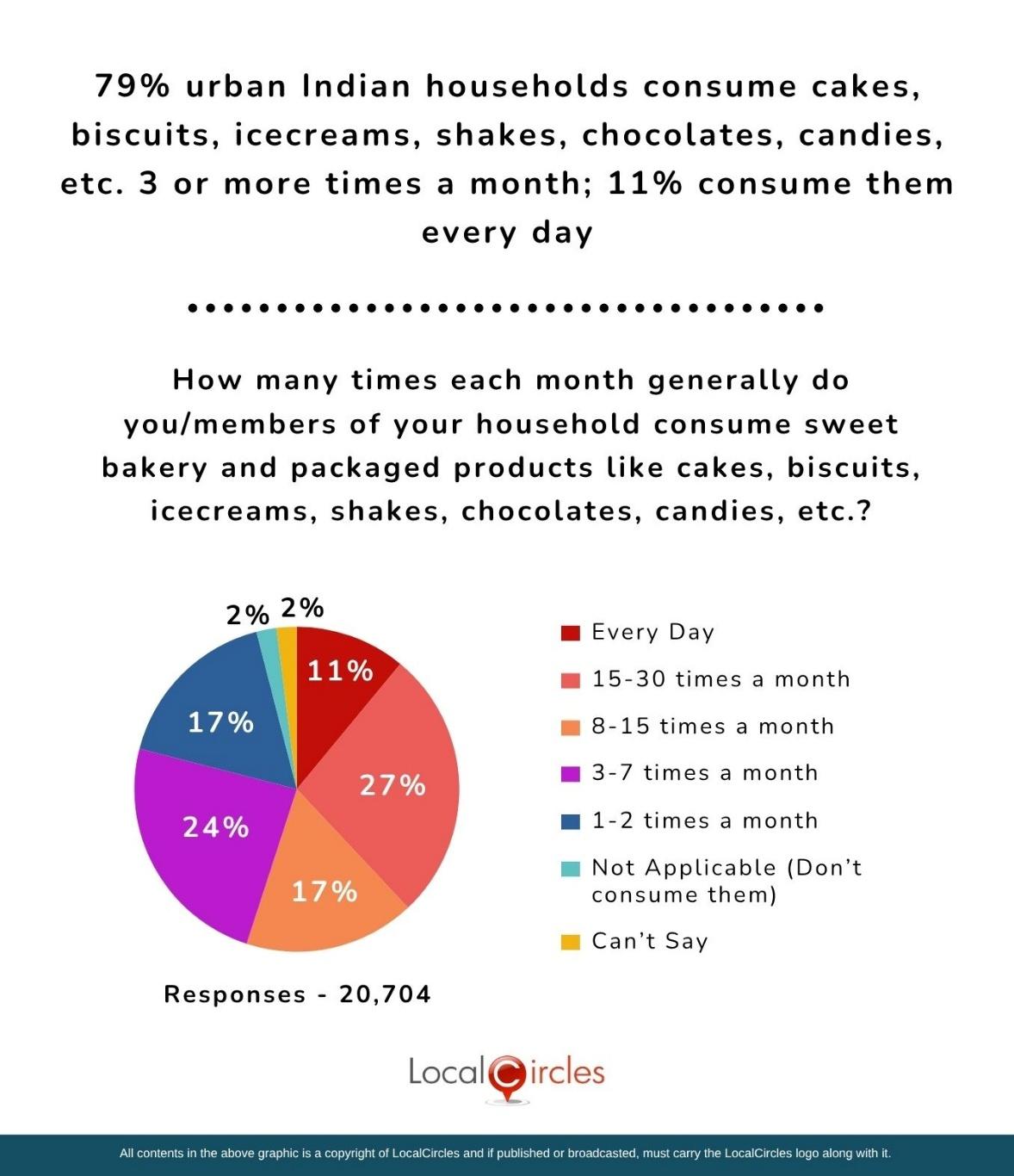
79% urban Indian households consume cakes, biscuits, icecreams, shakes, chocolates, candies, etc. 3 or more times a month; 11% consume them every day
Given the wide range of sweets, confectionary, bakery and other packaged products widening, the survey asked consumers, “How many times each month generally do you/ members of your household consume sweet bakery and package products like cakes, biscuits, ice creams, shakes, chocolates, candies, etc.?” Out of 20,704 consumers who responded to the question 11% indicated that they consume these products “every day”; 27% of respondents indicated “15-30 times a month”; 17% of respondents indicated “8-15 times a month”; 24% of respondents indicated “3-7 times a month”; 17% of respondents indicated "1-2 times a month”; 2% of respondents indicated "Not applicable (don’t consume them)”; and 2% of respondents did not give a clear answer. To sum up, 79% urban Indian households consume cakes, biscuits, ice cream, shakes, chocolates, candies, etc., 3 or more times a month; 11% of respondents indicated that they consume them every day.
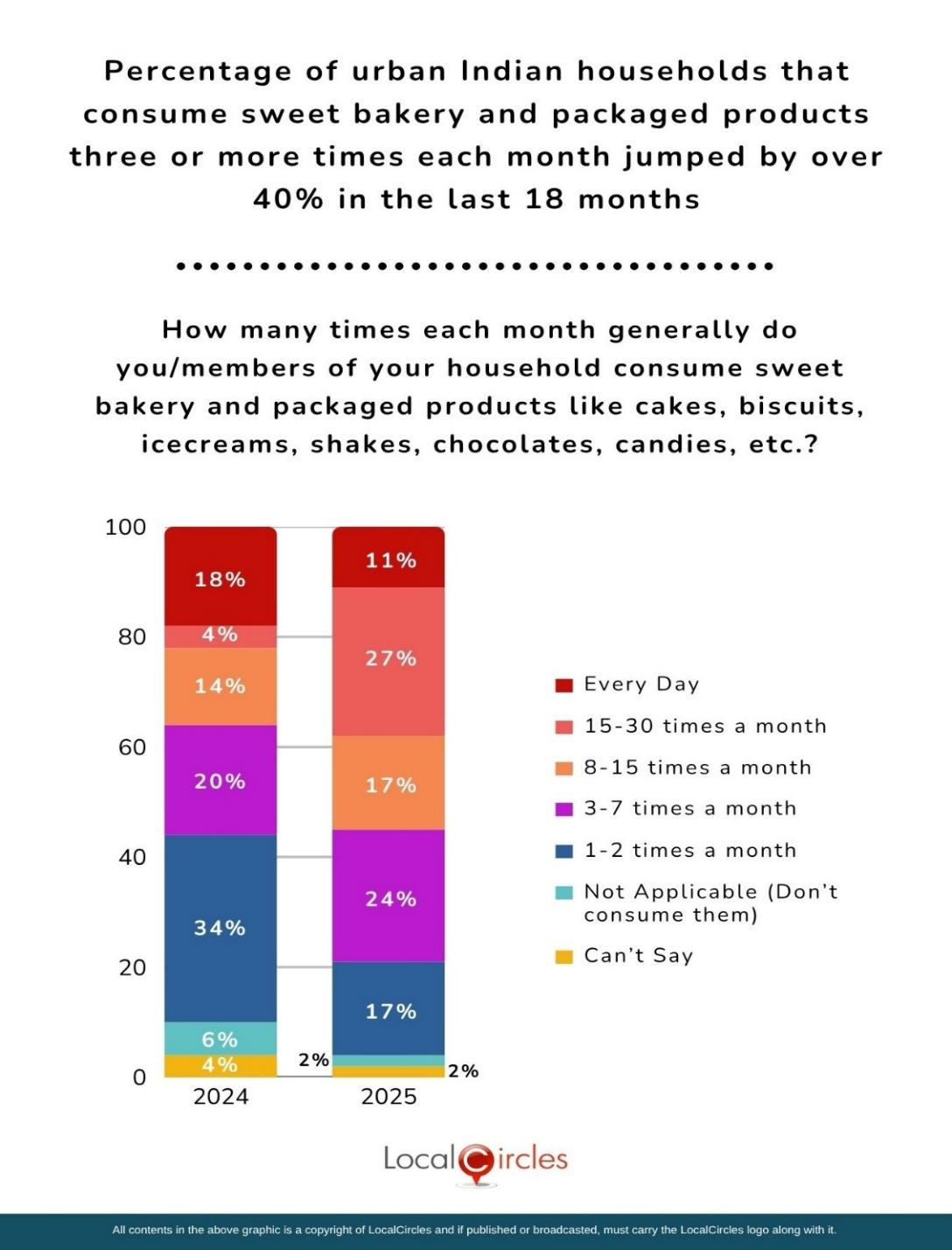
Percentage of urban Indian households that consume sweet bakery and packaged products three or more times each month jumped by over 40% in the last 18 months
When comparing the response to this question last year, the new survey shows that the percentage of urban Indian households that consume sweet bakery and packaged products three or more times each month has jumped by over 40% in the last 18 months.
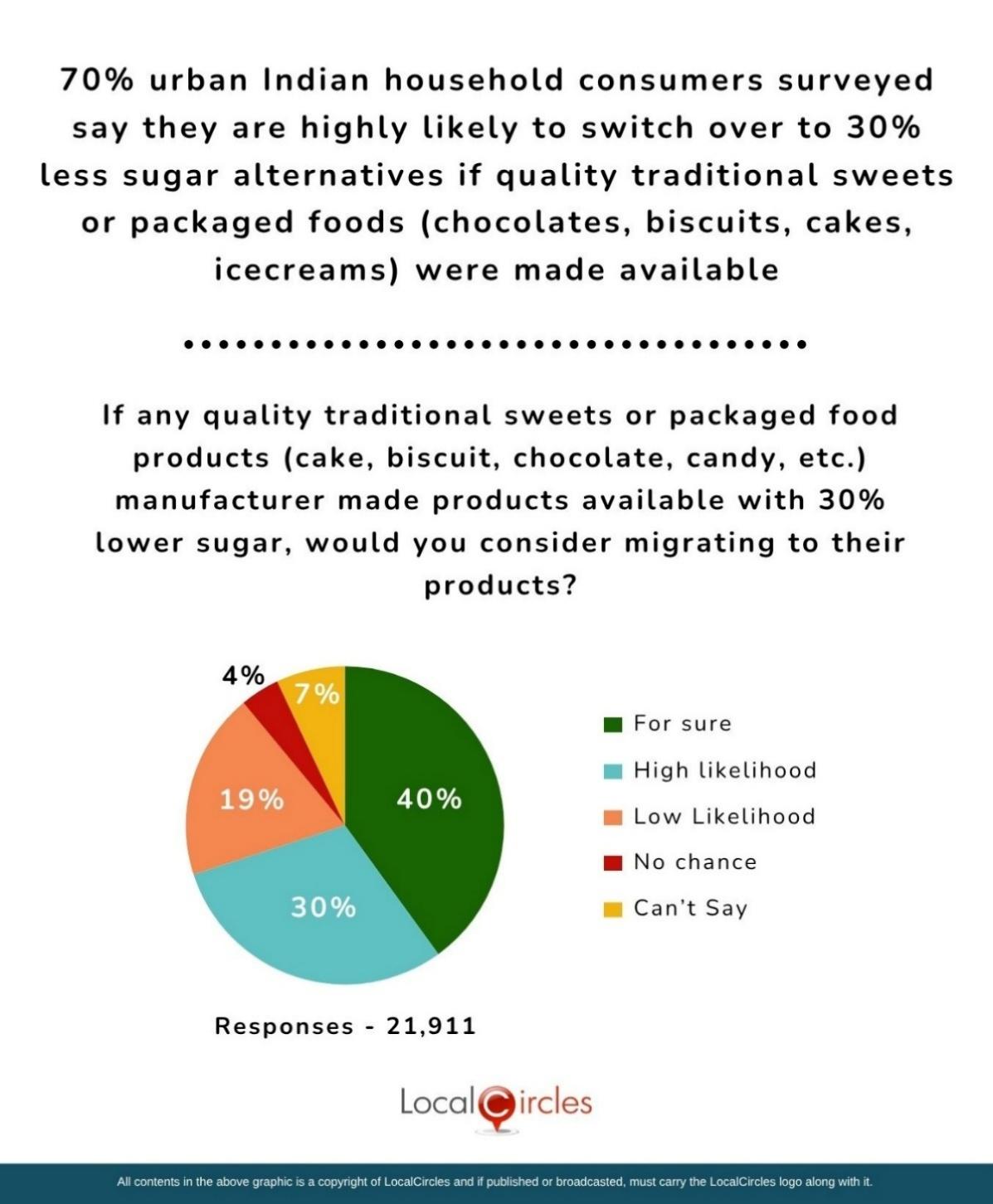
70% urban Indian household consumers surveyed say they are highly likely to switch over to 30% less sugar alternatives if quality traditional sweets or packaged foods (chocolates, biscuits, cakes, ice creams) were made available
As health awareness related to food consumption rises, there is growing concern among some sections of people about the sugar they consume. The survey asked consumers, “If any traditional sweets or packaged food products (cakes, biscuit, chocolate, candy, etc.) manufacturer made products available with 30% lower sugar, would you consider migrating to their products?” Out of 21, 911 consumers who responded to the question 40% indicated “for sure”; 30% of respondents indicated “high likelihood”; 19% of respondents indicated “low likelihood”; 4% of respondents indicated that there is “no chance“ of their making a switch; and 7% of respondents did not give a clear answer. To sum up, 70% urban Indian household consumers surveyed say they are highly likely to switch over to 30% less sugar alternatives if quality traditional sweets or packaged foods (chocolates, biscuits, cakes, ice creams) were made available.
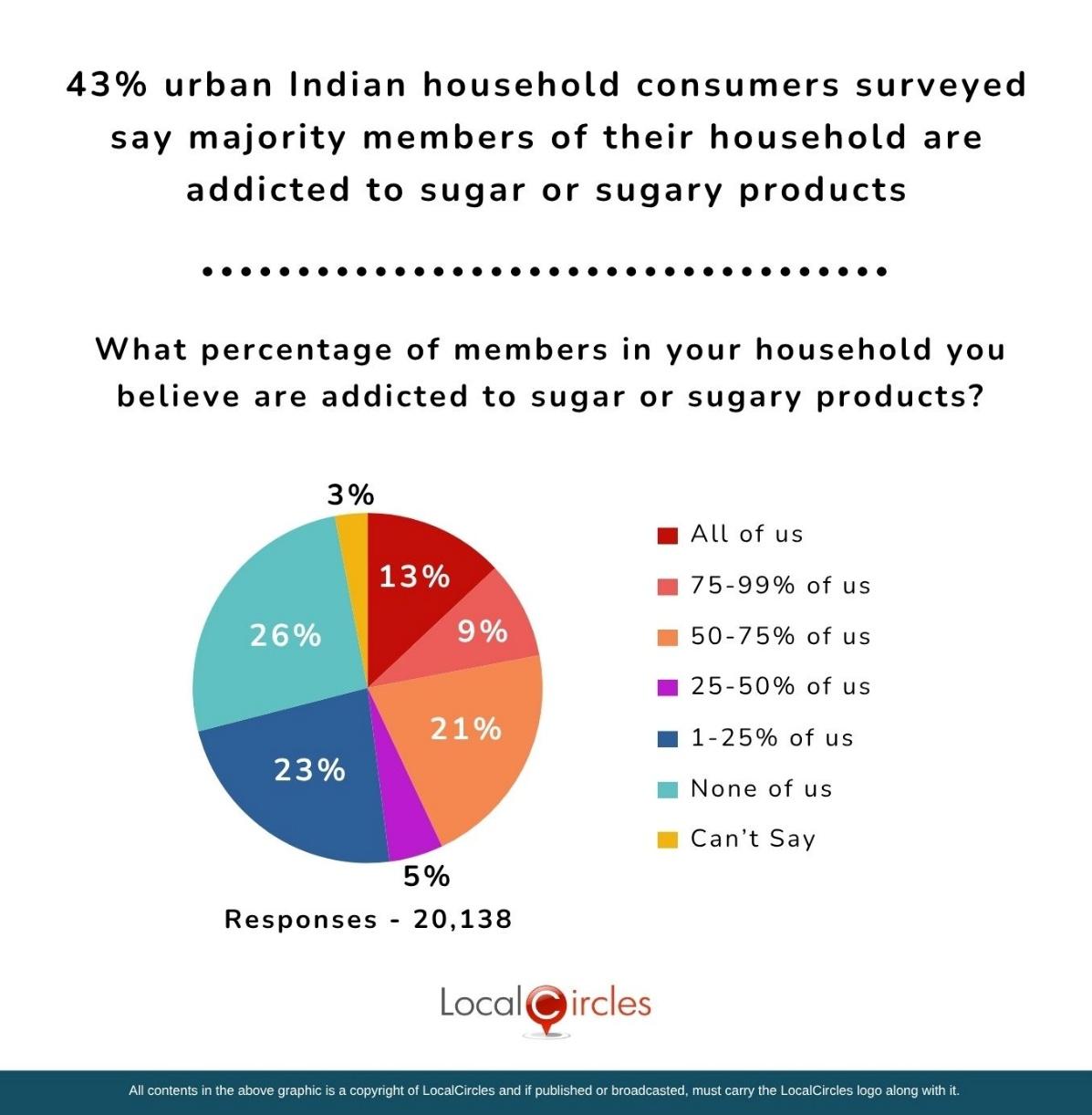
43% urban Indian household consumers surveyed say majority members of their household are addicted to sugar or sugary products
As not everyone likes sweet products or eating sweet products frequently, the survey asked, “What percentage of members in your household you believe are addicted to sugar or sugary products?” Out of 20,138 who responded to the question 13% indicated “all of us”; 9% of respondents indicated “75-99% of us”; 21% of respondents indicated “50-75% of us”; 5% of respondents indicated "25-50% of us"; 23% of respondents indicated "1-25% of us"; 26% of respondents indicated "none of us”; and 3% of respondents did not give a clear answer. To sum up, 43% urban Indian household consumers surveyed say majority members of their household are addicted to sugar or sugary products.
In summary, the study shows that 74% urban Indian households consume traditional Indian sweets 3 or more times a month. A compared to 2024 survey results, the percentage of urban Indian households that consume traditional sweets three or more times each month has jumped by over 40% in the last 18 months. It is not just traditional Indian sweets that lures consumers, as 79% urban Indian households surveyed indicated that they consume cakes, biscuits, ice cream, shakes, chocolates, candies, etc. 3 or more times a month. Out of them 11% consume them every day. The percentage of urban Indian households that consume sweet bakery and packaged products three or more times each month has risen by over 40% in the last 18 months.
The point to be noted by brands and manufacturers is that 70% urban Indian household consumers surveyed say they are highly likely to switch over to 30% less sugar alternatives if quality traditional sweets or packaged foods (chocolates, biscuits, cakes, ice creams) were made available. This is not something to be overlooked as 43% of urban Indian household consumers surveyed say majority of members of their household are addicted to sugar or sugary products.
Even as sugar consumption continues to rise in India, which is one of the largest sugar producers and largest consuming nation in the world, there is limited awareness that consuming food high in seed oils and sugar can cause diabetes, heart disease and obesity. The least the industry can do is make more low sugar products available to the consumers so the excess sugar consumption is curtailed.
Survey Demographics
The survey received over 84,000 responses from consumers located in 303 districts of India. 61% respondents were men while 39% respondents were women. 46% of respondents were from tier 1, 29% from tier 2 and 25% respondents were from tier 3 & 4 districts. The survey was conducted via LocalCircles platform, and all participants were validated citizens who had to be registered with LocalCircles to participate in this survey.
About LocalCircles
LocalCircles, India’s leading Community Social Media platform enables citizens and small businesses to escalate issues for policy and enforcement interventions and enables Government to make policies that are citizen and small business centric. LocalCircles is also India’s # 1 pollster on issues of governance, public and consumer interest. More about LocalCircles can be found on https://www.localcircles.com
For more queries - media@localcircles.com, +91-8585909866
All content in this report is a copyright of LocalCircles. Any reproduction or redistribution of the graphics or the data therein requires the LocalCircles logo to be carried along with it. In case any violation is observed LocalCircles reserves the right to take legal action.
Enter your email & mobile number and we will send you the instructions.
Note - The email can sometime gets delivered to the spam folder, so the instruction will be send to your mobile as well


